Imagine if Netflix celebrated the number of people who downloaded its app—but never cared whether anyone actually watched a movie. Or if Spotify proudly announced millions of users while ignoring whether they ever listened to music.
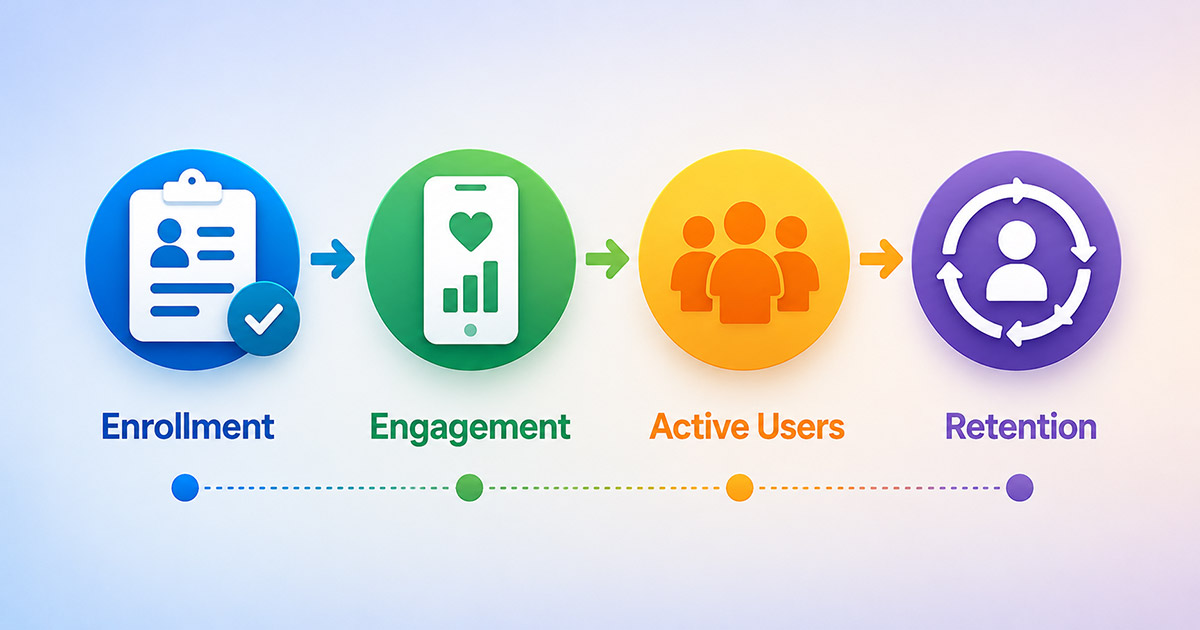
It sounds absurd. Yet many workplace wellness initiatives still define success primarily by enrollment. Enrollment matters, but it's only the beginning. The real question is what happens after someone signs up.
Do they come back tomorrow? Do they participate next week? Do they build new habits over time? Do they remain engaged months or even years later?
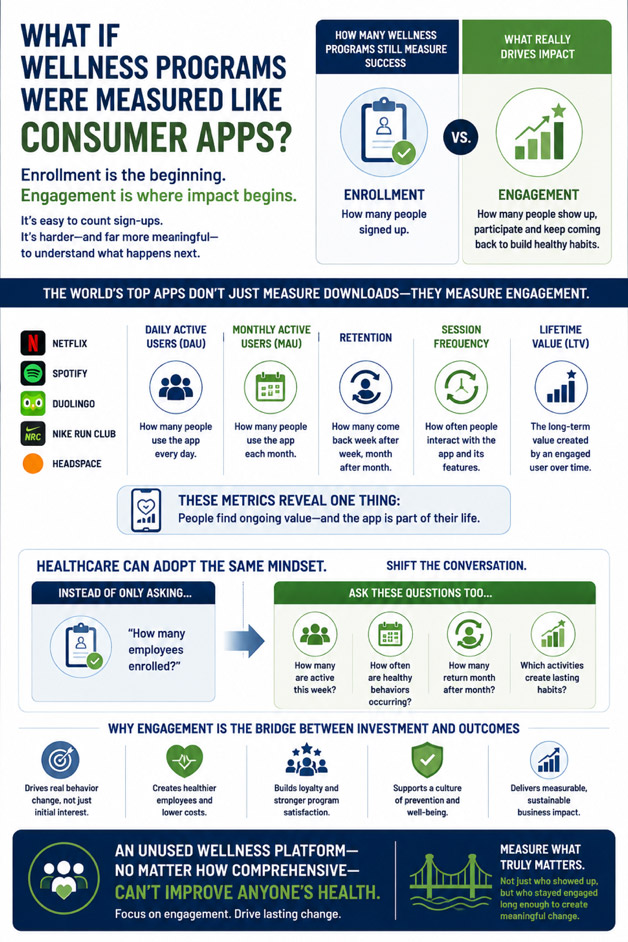
The world's most successful technology companies obsess over metrics like:
- Daily active users
- Monthly active users
- Retention
- Repeat engagement
- Session frequency
- Lifetime value
These measurements don't simply describe product performance. They reveal whether people are finding ongoing value. Healthcare has an opportunity to adopt the same mindset.
Rather than asking, "How many employees enrolled?" organizations could also ask:
- How many are active this week?
- How often are healthy behaviors occurring?
- How many participants return month after month?
- Which activities create lasting habits?
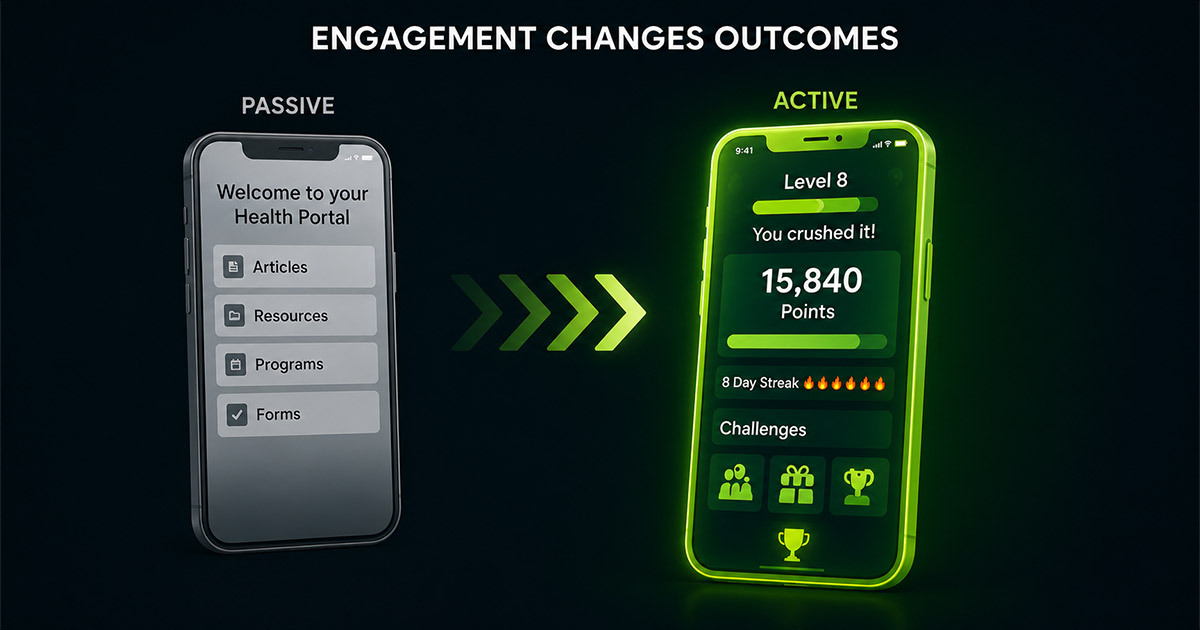
These questions shift the conversation from participation to impact. An unused wellness platform, no matter how comprehensive, can't improve anyone's health.
Engagement is the bridge between investment and outcomes. As workplace wellness continues to evolve, success will increasingly belong to organizations that measure what truly matters—not just who showed up, but who stayed engaged long enough to create meaningful change.