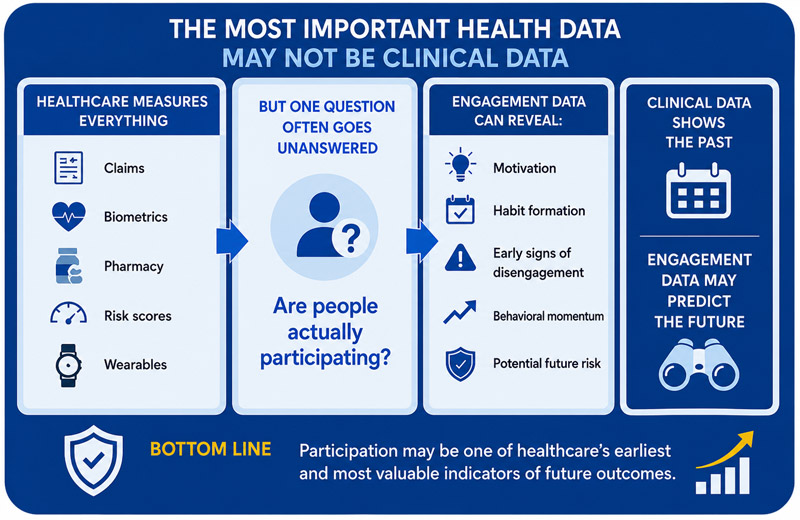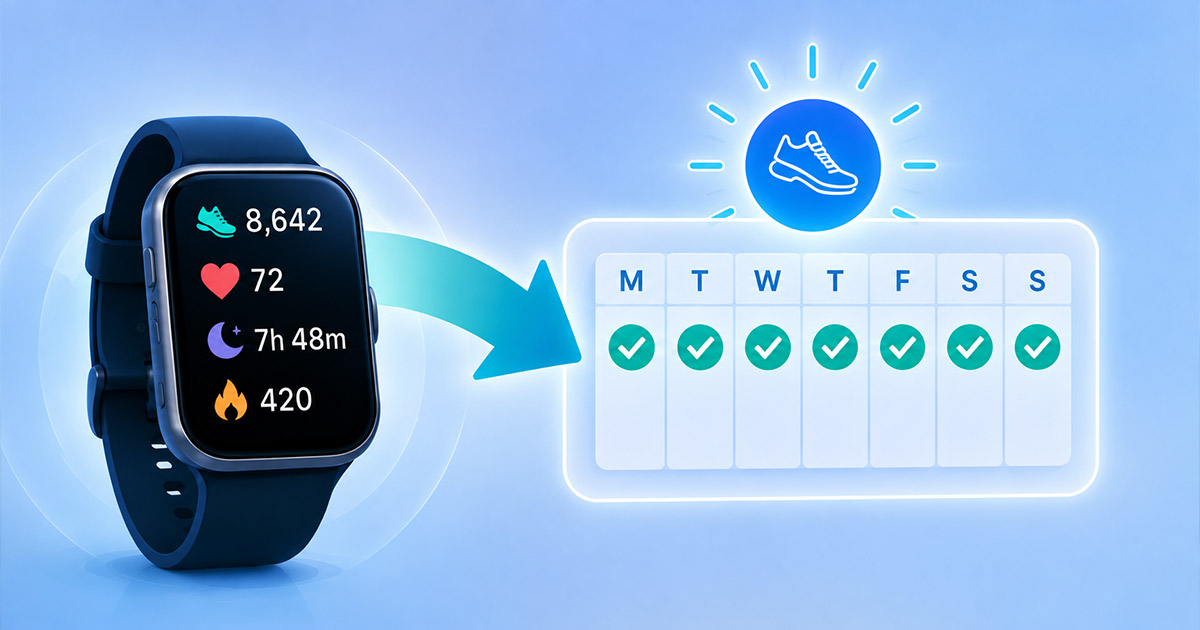

Healthcare organizations have never had more data. Claims data. Pharmacy data. Biometric data. Wearable data. Risk scores. Predictive models.
But there is one category of information that remains surprisingly underutilized and undervalued: Engagement data.
Are people participating? Are they returning? Are they building healthy habits? Are they interacting with the programs designed to improve their health?
These questions may be more important than many organizations realize.
Clinical data often tells us where someone has been. Engagement data can help predict where someone is going.
A person who consistently participates in healthy activities is more likely to complete preventive care, adhere to treatment plans, and make positive lifestyle changes. Conversely, someone who disengages entirely may represent an emerging risk long before that risk appears in claims data.
Engagement data provides an early signal. It offers insight into motivation, habits, and behavioral momentum.
As healthcare continues moving toward prevention and value-based care, understanding whether people are actively participating in their own health journeys may become one of the industry's most important measurements. The organizations that learn how to measure, understand, and improve engagement will have an enormous advantage.
Because ultimately, outcomes don't happen in a vacuum. They happen when people participate. And participation is one of the few things that can be measured before outcomes appear.