
For years, digital health has largely been built around observation.
Observe the patient.
Observe the employee.
Observe the member.
Observe the biometric signals.
The underlying assumption has been remarkably consistent across the industry. If people can see their health data clearly enough, better outcomes will follow. That assumption is now being tested.
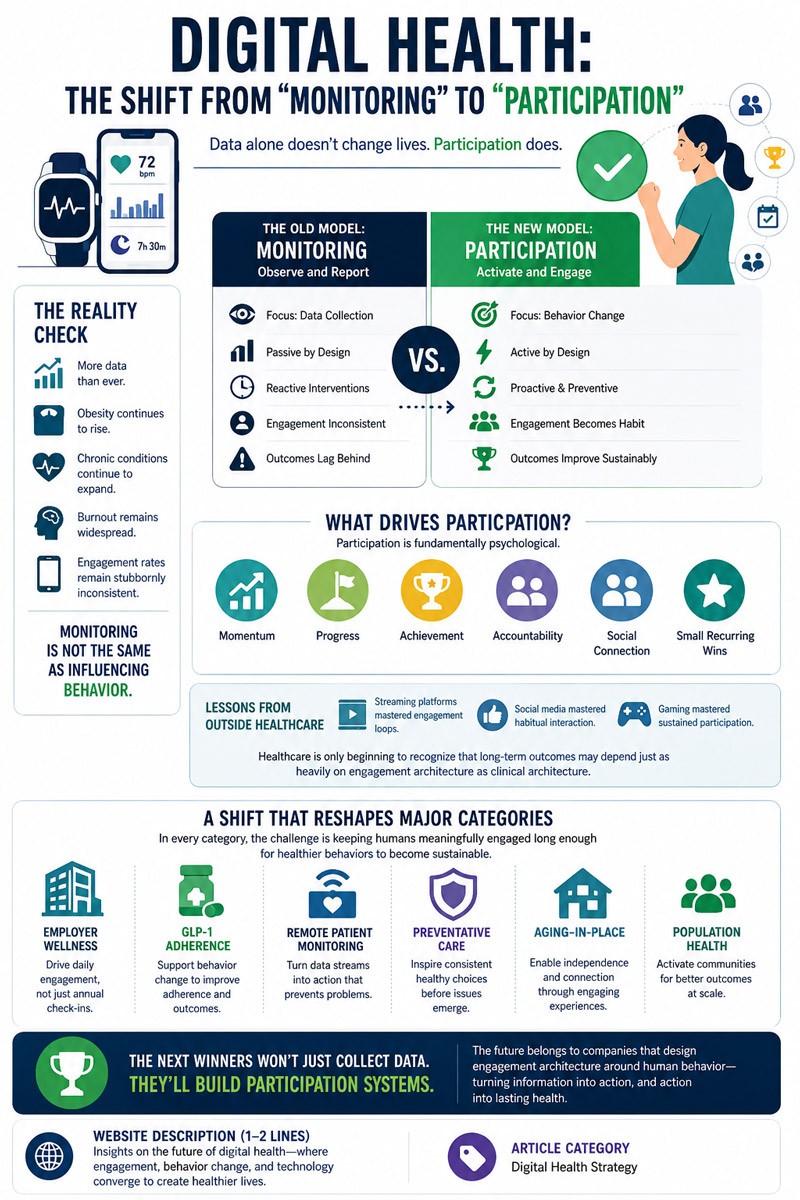
The market is flooded with health data. Consumers can track almost everything. Yet obesity continues to rise. Chronic conditions continue to expand. Burnout remains widespread. Engagement rates across many wellness and digital health platforms remain stubbornly inconsistent.
Monitoring behavior is not the same as influencing behavior. This distinction may define the next phase of digital health.
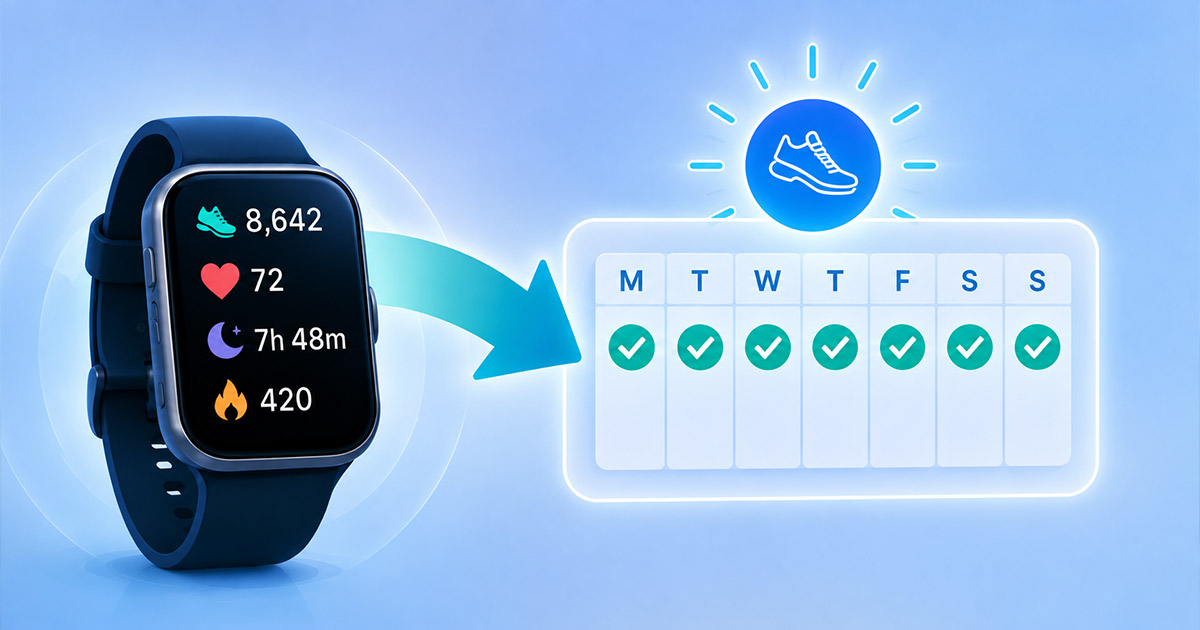
Historically, healthcare systems have been reactive. They measure symptoms, monitor conditions, and intervene after problems appear. Digital health initially improved this model by making monitoring continuous rather than episodic. But continuous monitoring still does not guarantee continuous participation. A person can wear a device every day and still remain largely disengaged from their own health.
That reality could be foreshadowing a broader market transition. The next generation of digital health platforms may become less focused on simply reporting health information and more focused on continuously activating human participation. That shift changes everything.
Instead of asking: "How accurately can we measure?"
The more important question becomes: "How often can we inspire action?"
This is where digital health begins moving beyond traditional healthcare thinking and closer to behavioral systems design.
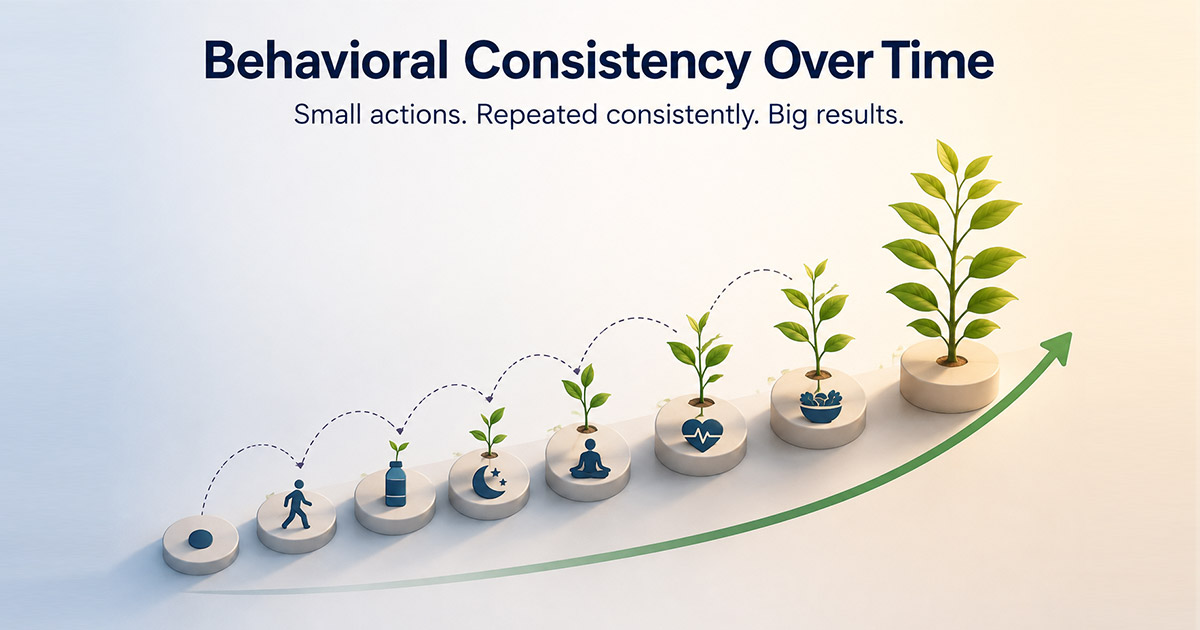
Participation is fundamentally psychological. People engage more consistently when systems create momentum, progress, achievement, accountability, connection – and most importantly, small recurring wins.
The industries that understand this best are often outside healthcare entirely.
Streaming platforms mastered engagement loops. Social media mastered habitual interaction. Gaming mastered sustained participation.
Healthcare is only beginning to recognize that long-term outcomes may depend just as heavily on engagement architecture as clinical architecture.
That realization could reshape major categories across digital health:
- Employer wellness
- GLP-1 adherence
- Remote patient monitoring
- Preventative care
- Aging-in-place
- Population health
Because in each of these areas, the central challenge is not simply collecting information. It is keeping humans meaningfully engaged long enough for healthier behaviors to become sustainable.
The winners in digital health's next era may not be the companies with the most sensors, the most dashboards, or even the most data. They may be the companies that build the strongest participation systems around human behavior.
That is a very different market than the one digital health started with. And it may become a much bigger one.