Health insurers have invested billions into digital health: member portals, condition management platforms, apps and more.
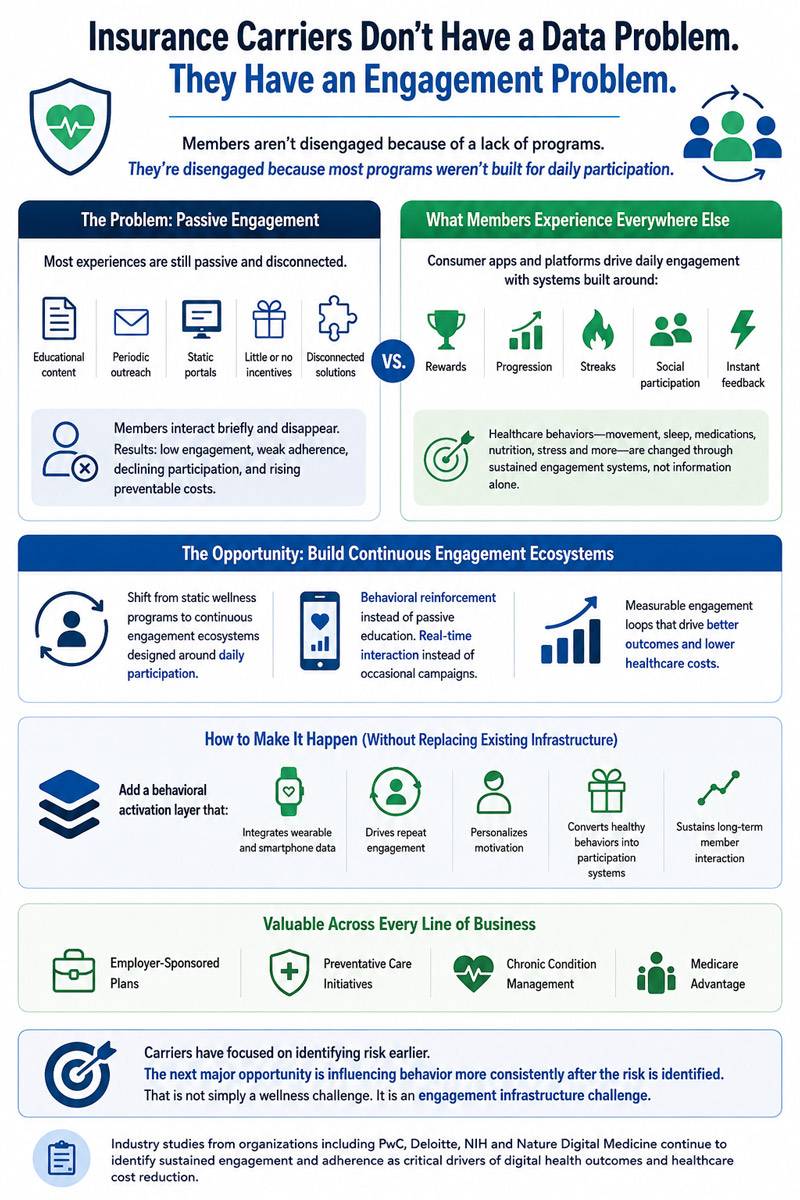
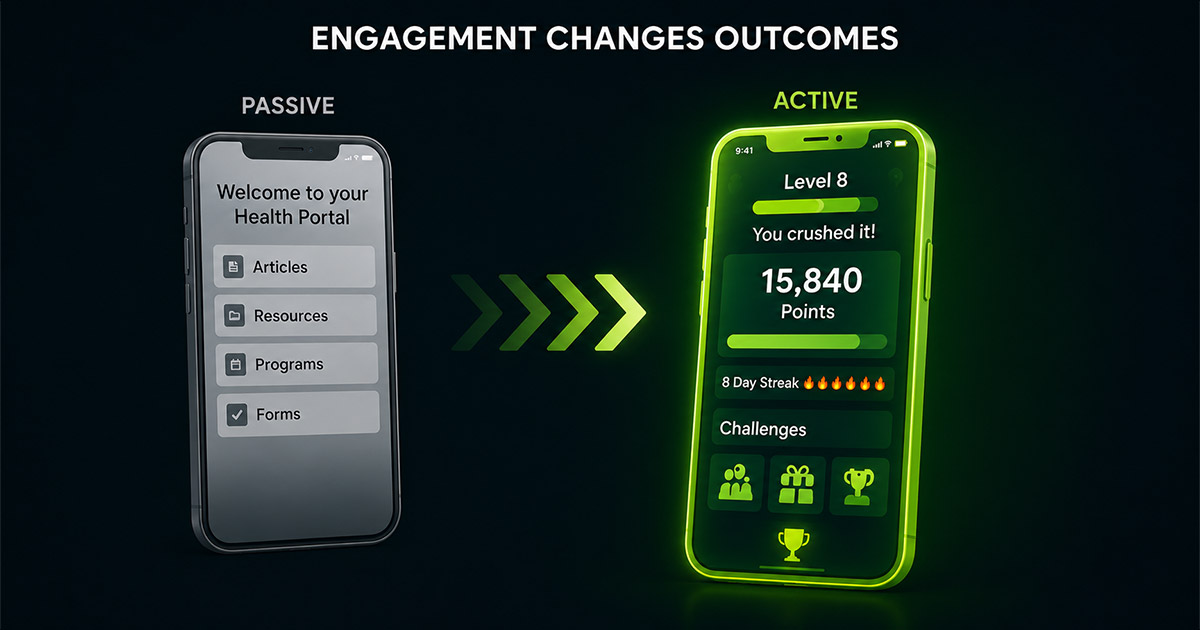
Yet one major problem continues to persist. Most members remain disengaged. Not because carriers lack programs. Because most programs were never designed to drive daily participation.
Today, many engagement experiences are still fundamentally passive:
- Educational content
- Periodic outreach
- Static portals
- Little or no incentives
- Disconnected point solutions
A typical member interacts for a brief period and then disappears. The results are predictable: low engagement, weak adherence, declining participation, and rising preventable costs. Healthcare engagement models often still resemble annual compliance programs.
Meanwhile, consumer behavior outside healthcare has changed dramatically. People now engage daily with digital systems built around:
- Rewards
- Progression
- Streaks
- Social participation
- Instant feedback
That gap is becoming increasingly expensive for insurers because healthcare costs are heavily influenced by everyday behaviors: movement, sleep, medication adherence, preventative activity, stress management, and proper nutrition.
These behaviors are not changed through information alone. They are changed through sustained engagement systems.
The carriers that win the next phase of healthcare may shift away from static wellness programs and toward continuous engagement ecosystems designed around daily participation. That means behavioral reinforcement instead of passive education. Real-time interaction instead of occasional campaigns. And measurable engagement loops.
Importantly, this does not require replacing existing carrier infrastructure. It requires adding a behavioral activation layer capable of: integrating wearable and smartphone data; driving repeat engagement; personalizing motivation; converting healthy behaviors into participation systems; and sustaining long-term member interaction.
This is valuable for everything from employer-sponsored plans to preventative care initiatives to chronic condition management to Medicare Advantage.
Carriers have focused primarily on identifying risk earlier. The next major opportunity may come from influencing behavior more consistently after the risk is identified. That is not simply a wellness challenge. It is an engagement infrastructure challenge.