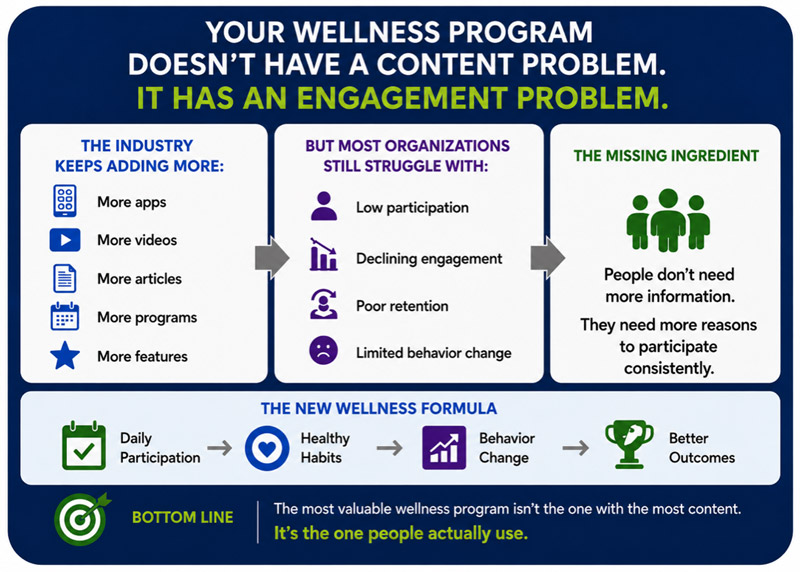
The wellness industry doesn't suffer from a lack of content.
There are thousands of health articles, videos, meditation programs, fitness classes, nutrition guides, and digital tools available to employees today. Most organizations offer more resources than ever before.
Yet participation remains stubbornly low.
According to multiple industry studies, only a fraction of eligible employees actively engage with employer-sponsored wellness programs each month. Many organizations celebrate registration numbers while ignoring a much more important metric: how many people are actually participating consistently.
This is the central challenge of workplace wellness. The problem isn't access. The problem is activation.
Most people already know what they should do to improve their health. They know they should walk more, sleep better, manage stress, eat healthier foods, and complete preventive screenings.
Knowledge isn't the barrier. Behavior is.
Too many wellness strategies are built on the assumption that if people are given enough information, they will naturally make healthier choices. Decades of evidence suggest otherwise.
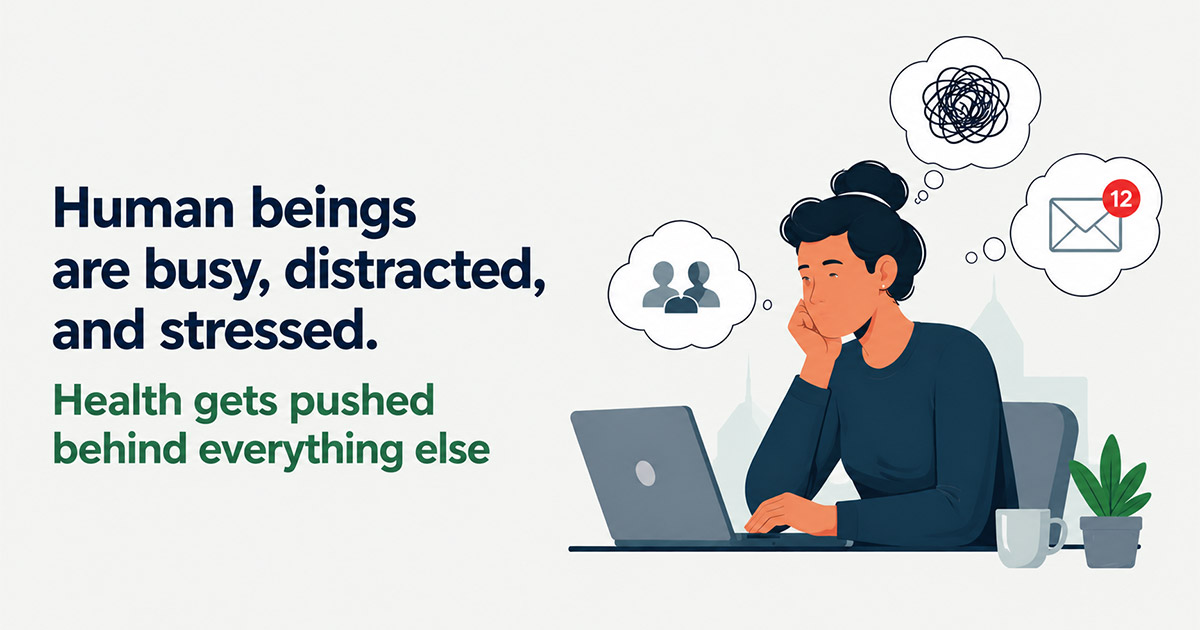
Human beings are busy. They're distracted. They're stressed. Health often gets pushed behind work responsibilities, family obligations, and daily life.
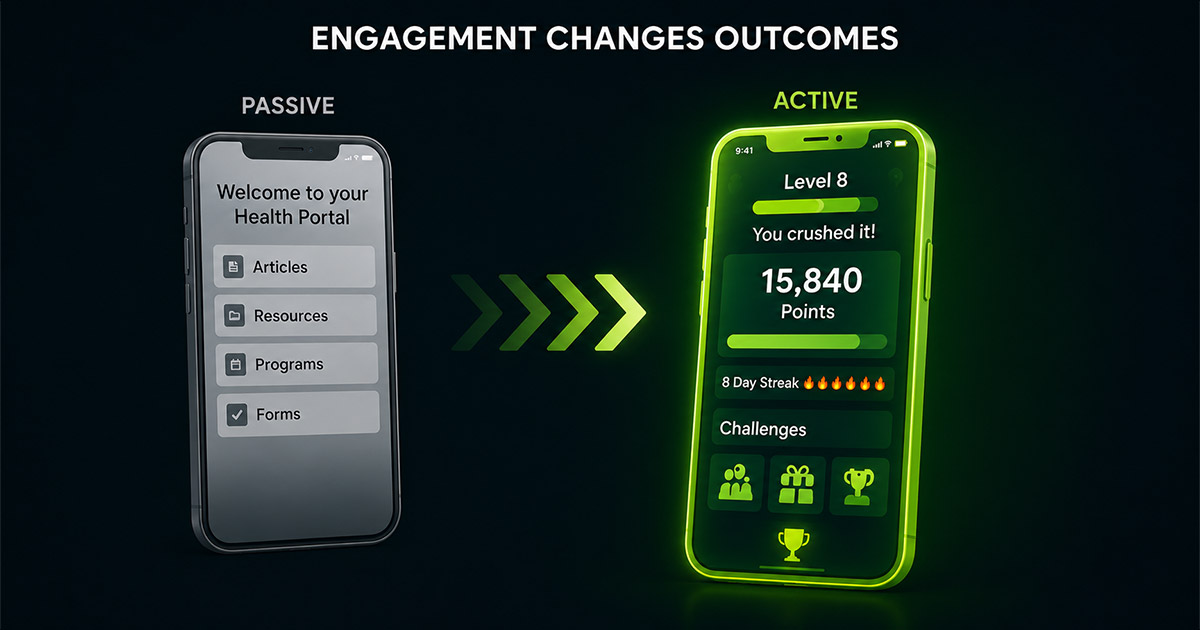
This is why engagement matters.
The organizations producing the best health outcomes are increasingly focusing less on delivering more content and more on creating reasons for people to come back tomorrow.
And then the next day. And then the next.
Daily participation creates habits. Habits create behavior change. Behavior change creates outcomes.
The future of wellness won't belong to the companies with the largest libraries of content. It will belong to those that can consistently motivate ordinary people to take small, positive actions over long periods of time.
Because in the end, the most valuable wellness program isn't the one with the most resources. It's the one that people actually use.