
We've flooded people with health data and expected behavior change to magically follow. It hasn't.
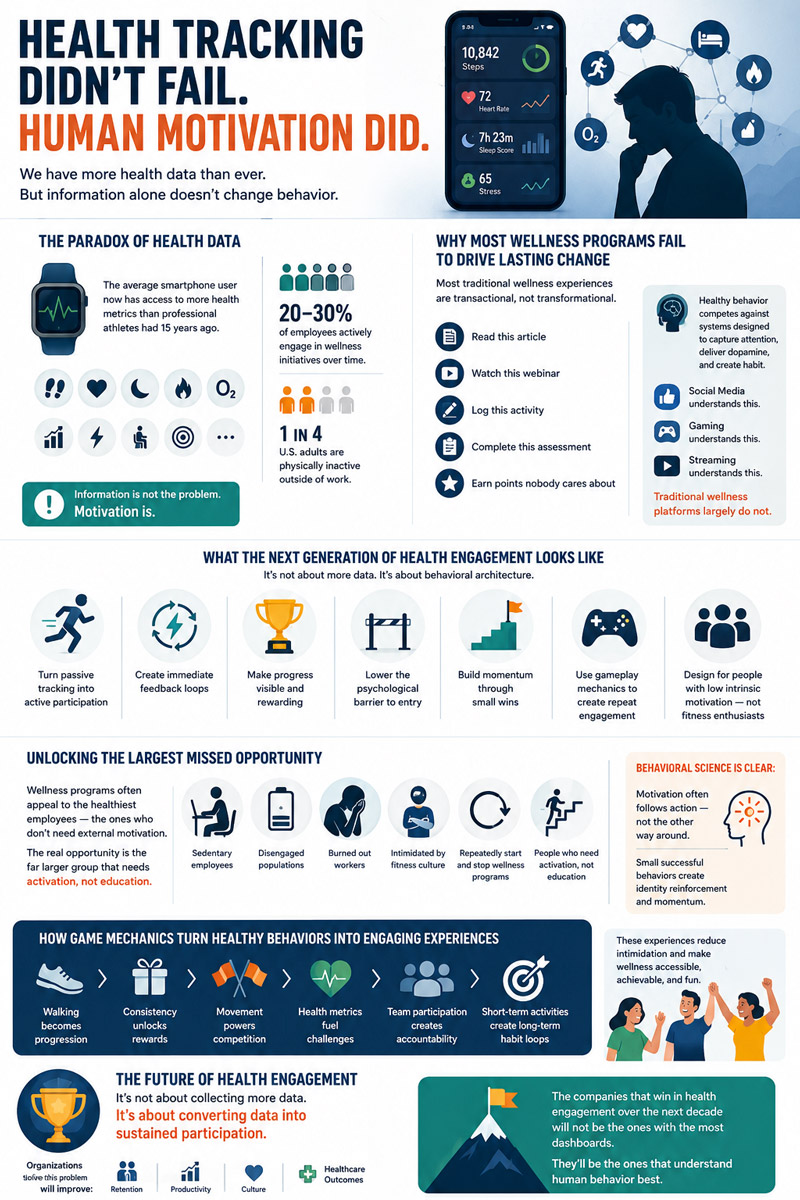
The average smartphone user now has access to more health metrics than professional athletes had 15 years ago—steps, heart rate, sleep scores, calories, VO2 max, recovery data, stress tracking, movement reminders, blood oxygen and more. Yet obesity rates continue climbing, sedentary lifestyles remain widespread, and long-term wellness engagement is notoriously weak.
Because information is not the problem. Motivation is. Most wellness strategies are still designed around a deeply flawed assumption: "If people can see their data, they'll naturally want to improve it." But that only works for a small percentage of the population—the already motivated.
Research consistently shows that roughly 20–30% of employees actively engage in wellness initiatives over time. Even fewer sustain participation long enough to meaningfully impact outcomes. Meanwhile, CDC data estimates that nearly 1 in 4 U.S. adults are physically inactive outside of work. Millions of people know they should move more, sleep better, reduce stress, or improve nutrition. But knowledge alone rarely changes behavior.
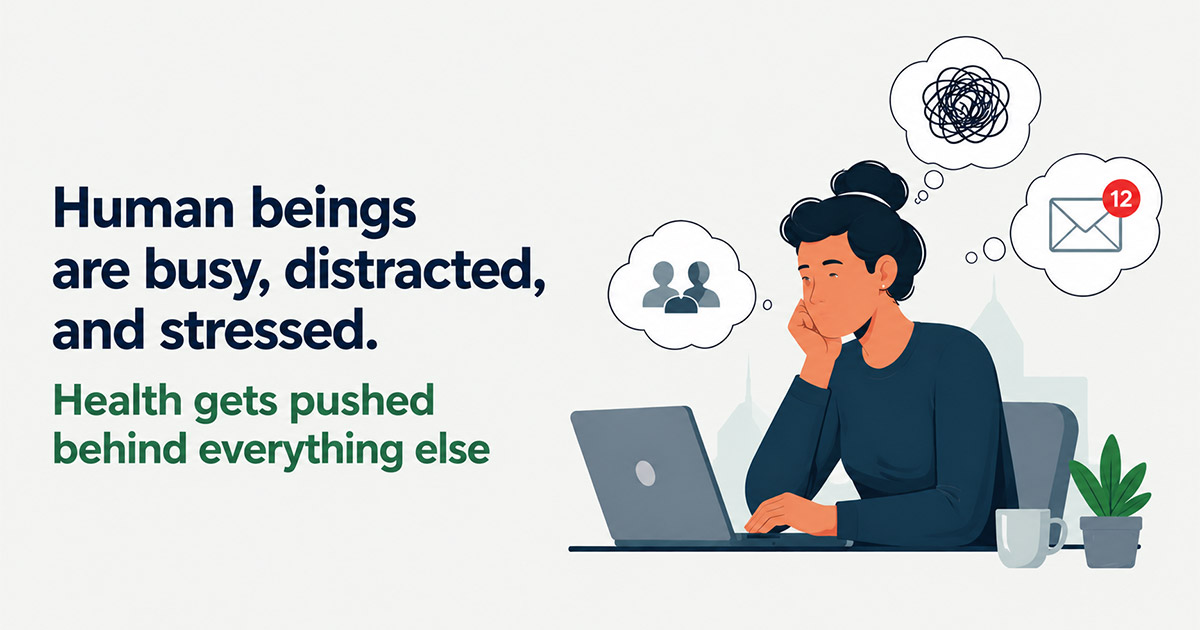
That gap between awareness and action is where most health platforms quietly fail. The problem is not that people lack access to health information. The problem is that healthy behavior competes against systems specifically designed to capture attention, deliver dopamine, and create habitual engagement.
Social media understands this.
Gaming understands this.
Streaming platforms understand this.
Traditional wellness and health promotion platforms largely do not.
Most wellness experiences still feel transactional:
- Read this article
- Watch this webinar
- Log this activity
- Complete this assessment
- Earn points nobody cares about
That model works for compliance. It does not work for sustained human behavior. The next generation of health engagement will not be built around education alone. It will be built around behavioral architecture.
That means:
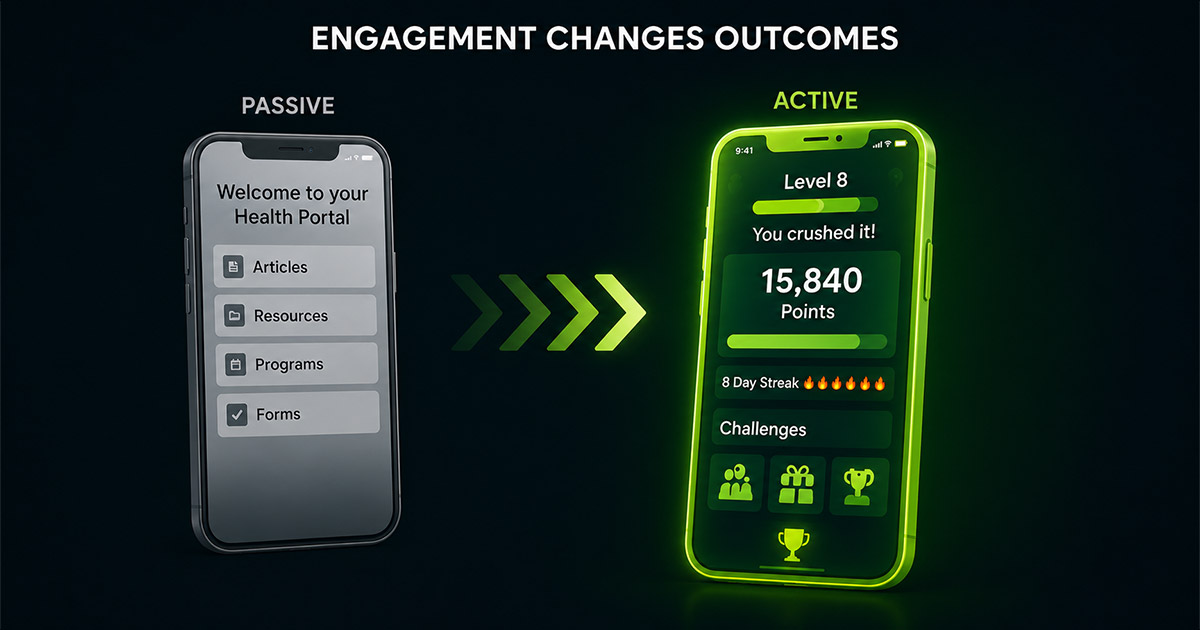
- Turning passive tracking into active participation
- Creating immediate feedback loops
- Making progress visible and rewarding
- Lowering the psychological barrier to entry
- Building momentum through small wins
- Using gameplay mechanics to create repeat engagement
- Designing for people with low intrinsic motivation — not fitness enthusiasts
There is a critical mistake many companies still make. They build wellness programs that inherently appeal to only the healthiest employees in the organization. These are the people who already own wearables, already exercise, already optimize sleep, and already track macros. They don't need external motivation or support.
The largest opportunity sits with the far bigger group:
- Sedentary employees
- Disengaged populations
- Burned out workers
- People intimidated by fitness culture
- Individuals who repeatedly start and stop wellness programs
- People who need activation, not education
Behavioral science shows that motivation often follows action—not the other way around. Small successful behaviors create identity reinforcement and momentum. That means the real challenge is not convincing people to become healthy overnight. It's getting them to take the next small action tomorrow.
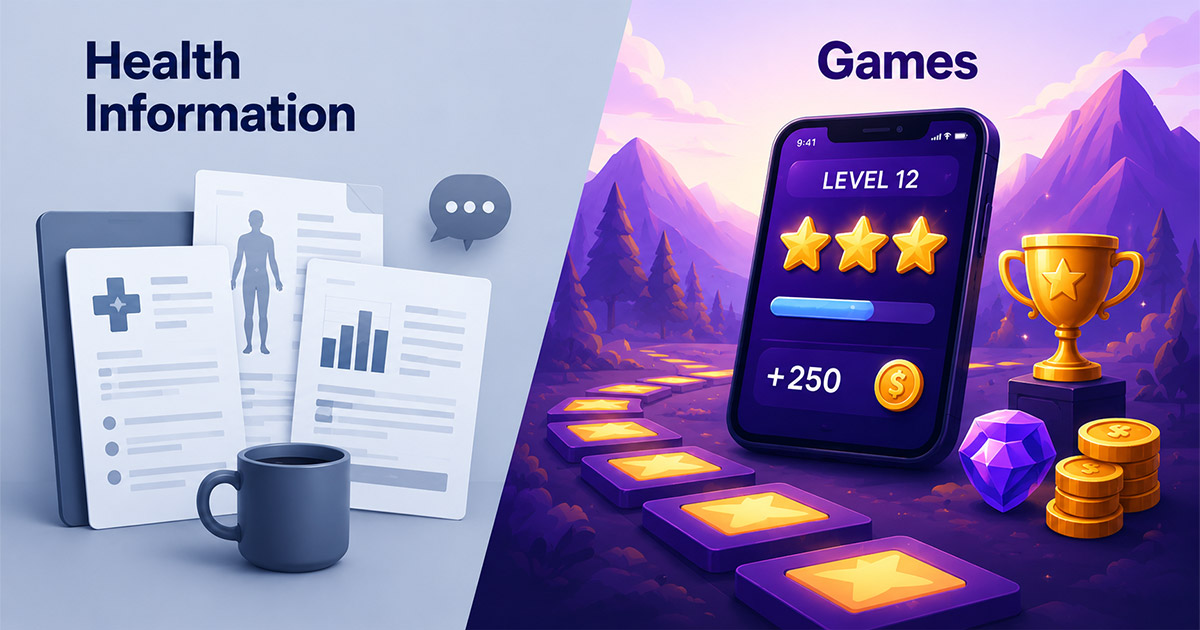
This is where game mechanics become incredibly powerful when applied correctly. The most effective platforms increasingly convert everyday health behaviors into dynamic experiences:
- Walking becomes progression
- Consistency unlocks rewards
- Movement powers competition
- Health metrics fuel challenges
- Team participation creates accountability
- Short-term activities create long-term habit loops
And importantly, these systems reduce the intimidation factor that causes many sedentary individuals to disengage in the first place.
A person who would never join a "fitness challenge" may absolutely participate in:
- A team-based competition
- A casual movement game
- A short-term streak activity
- A social accountability experience
- A lightweight wellness challenge tied to rewards or recognition
That distinction matters enormously.
The future of health engagement is not about collecting more data. We already have more health data than most people know what to do with. The future is about converting data into sustained participation. Because the organizations that solve this problem will not just improve wellness metrics. They will improve retention, productivity, culture and healthcare outcomes.
And they will finally activate the population that traditional wellness programs have missed for years.
The companies that win in health engagement over the next decade will not be the ones with the most dashboards. They'll be the ones that understand human behavior best.