
The Companies Winning the Talent War Aren't Adding More Benefits. They're Making Existing Benefits Matter

3D bar chart showing rising colored blocks with workforce icons under an upward-trending arrow, representing workforce growth and benefit ROI.

For years, employers have competed by expanding their benefits portfolios. Another wellness vendor. Another mental health resource. Another financial wellbeing tool. Another app. Another platform.

Yet participation rates often tell a very different story. The challenge facing employers today isn't a shortage of benefits. It's a shortage of engagement.

Most organizations already provide employees with resources that could meaningfully improve health, financial wellbeing, stress management, professional development and work-life balance. The problem is that too few employees consistently use them. Adding another benefit rarely solves that problem. Making existing benefits easier, more rewarding and more engaging often does.

The conversation should shift from:

"What else should we offer?"

to:

"How do we help more employees participate?"

Even modest improvements in engagement can dramatically increase the return on investments companies have already made. Higher utilization. Better health outcomes. Stronger retention. Greater employee satisfaction. Improved productivity.

This is particularly important for organizations with large hourly or frontline workforces, where time constraints, varying schedules and competing priorities make participation especially difficult.

The companies creating the greatest value aren't necessarily spending the most. They're activating the investments they already have.

In the years ahead, successful employers may not be defined by the size of their benefits package. They'll be defined by how many employees actually experience its value.
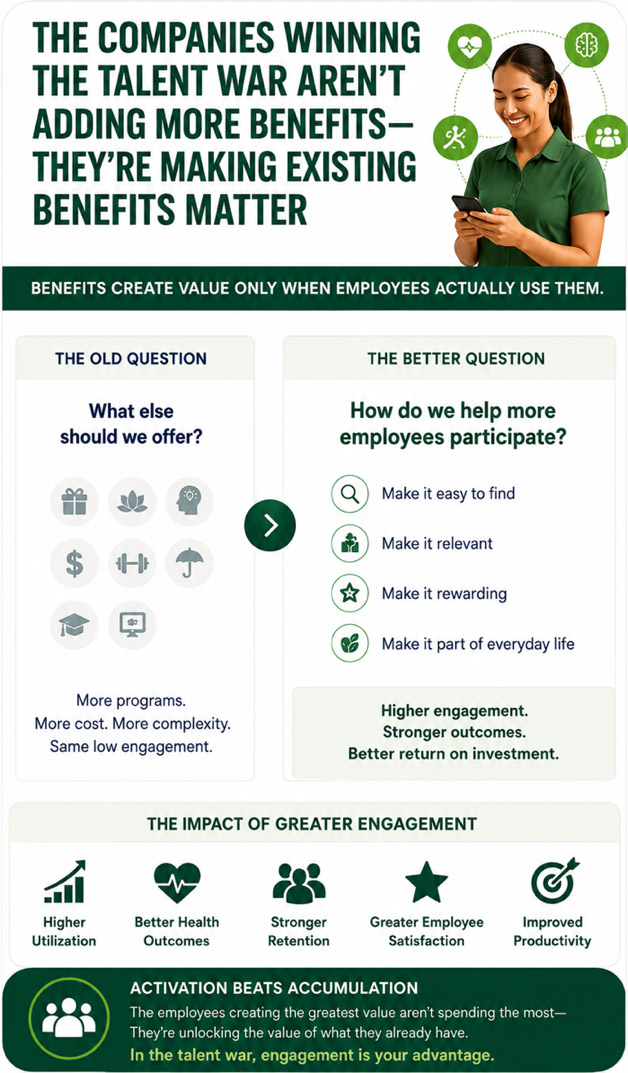
Infographic titled 'The Companies Winning the Talent War Aren't Adding More Benefits—They're Making Existing Benefits Matter,' contrasting program accumulation with employee activation strategies to improve ROI and retention.

Related Articles

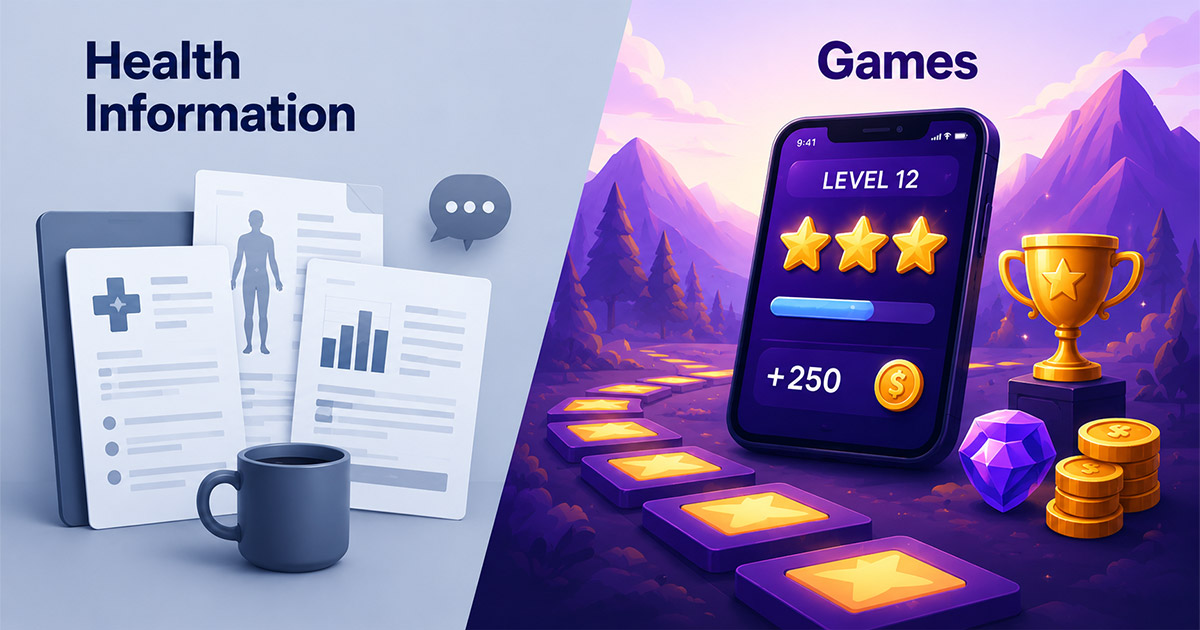
Split graphic comparing static medical reports and health information with an engaging, gamified smartphone reward experience.

Healthcare May Be Looking for Answers in the Wrong Industry

The gaming industry has spent decades learning how to keep people voluntarily engaged. Healthcare can apply many of the same principles—progress, rewards, social connection and purpose—to turn passive health experiences into sustained participation.

April 6, 2026 by Vigoroom
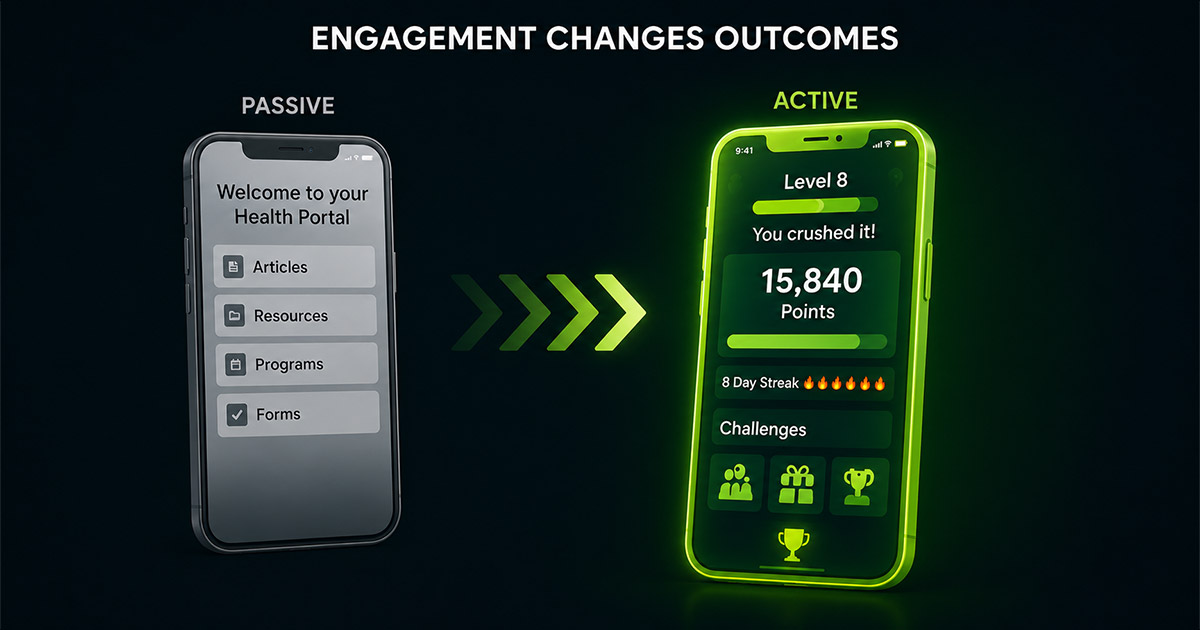
Comparison showing a transition from a passive health portal smartphone app to an active gamified app featuring point totals and streak tracking.

Insurance Carriers Don't Have a Data Problem. They Have an Engagement Problem.

Insurance carriers have more health data and digital tools than ever, yet sustained member participation remains elusive. The next opportunity is adding a behavioral activation layer that turns existing programs and data into continuous, measurable engagement.

April 20, 2026 by Vigoroom
Vector illustration of four diverse colleagues high-fiving in an office setting, representing team collaboration and social connection.

The Best Employee Experience Doesn't Feel Like Work

Employees bring the expectations created by great consumer technology into the workplace. By designing experiences around progress, recognition, personalization, choice, and positive reinforcement, employers can transform participation from an obligation into something employees genuinely want to repeat.

September 7, 2026 by Vigoroom
Back to Insights