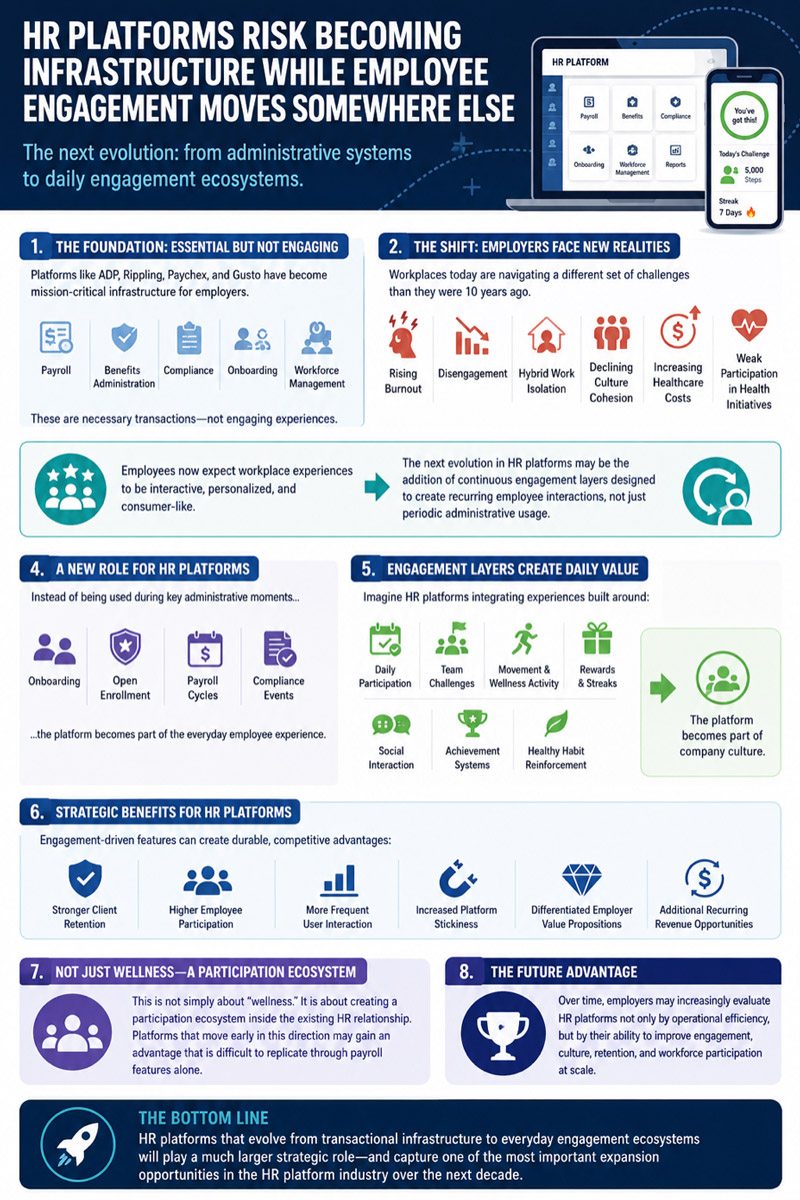

Platforms like ADP, Rippling, Paychex, and Gusto have become essential operating systems for modern employers. Payroll. Benefits administration. Compliance. Onboarding. Workforce management. Necessary transactions, but not engaging.
These platforms sit at the center of the employer relationship. But there's a growing strategic risk in the HR platform market as core HR infrastructure is becoming increasingly commoditized. As features converge, the long-term winners may not simply be the platforms that manage employees best. They may be the platforms that engage employees best. That is a very different objective. And speaks to a major opportunity.
Because employers are facing different problems than they were 10 years ago:
- Rising burnout
- Disengagement
- Hybrid work isolation
- Declining culture cohesion
- Increasing healthcare costs
- Weak participation in health initiatives
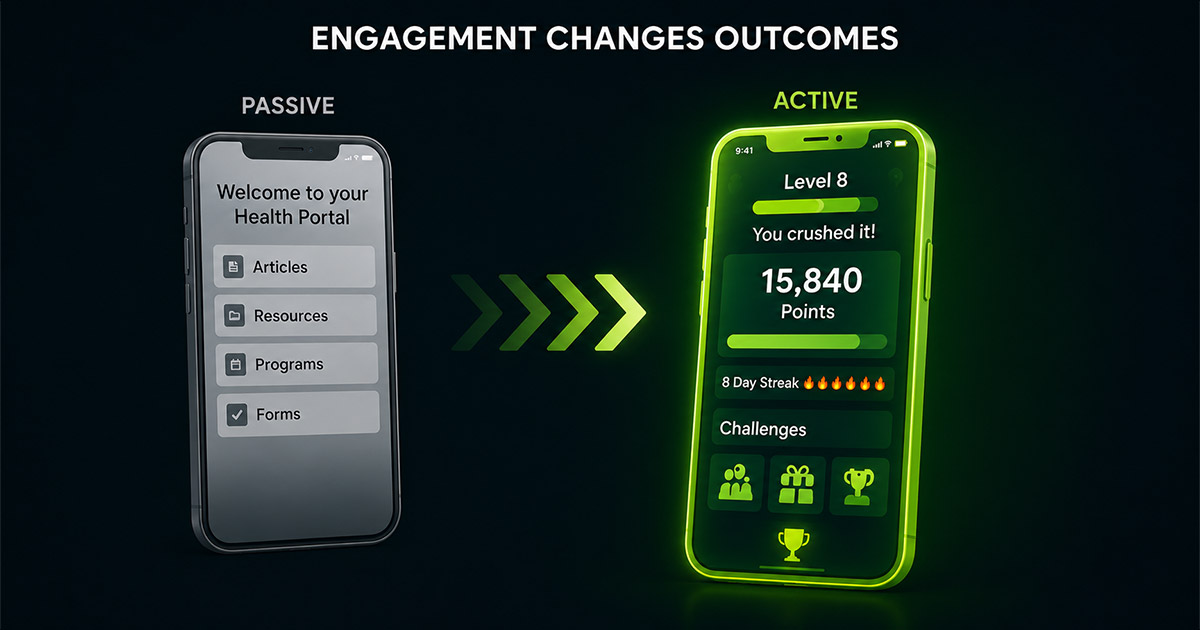
Employees now expect workplace experiences to feel interactive, personalized, and consumer-like. So the next major evolution in HR platforms may be the addition of continuous engagement layers designed to create recurring employee interactions, not just periodic administrative usage.
That changes the role of the platform entirely. Instead of being used primarily during onboarding, open enrollment, payroll cycles and compliance events, the HR platform begins participating in everyday employee experience.
This is where behavioral engagement systems become strategically valuable. Imagine HR platforms integrating experiences built around:
- Daily participation
- Team challenges
- Movement and wellness activity
- Rewards and streaks
- Social interaction
- Achievement systems
- Healthy habit reinforcement
Suddenly the platform is no longer just administrative infrastructure. It becomes part of company culture.
This has important implications for HR platforms competing in crowded markets. Because engagement-driven features can create stronger client retention, higher employee participation, more frequent user interaction, increased platform stickiness, differentiated employer value propositions, and additional recurring revenue opportunities.
Importantly, this is not simply about "wellness." It is about creating a participation ecosystem inside the existing HR relationship. The platforms that move early in this direction may gain an advantage that is difficult to replicate through payroll features alone. And over time, employers may increasingly evaluate HR platforms not only by operational efficiency, but by their ability to improve engagement, culture, retention, and workforce participation at scale.
That is a much larger strategic role. And it may become one of the most important expansion opportunities in the HR platform industry over the next decade.