
Healthcare has become remarkably good at managing illness. We're improving at identifying diabetes, hypertension, depression, obesity, and countless other conditions once they've already begun affecting people's lives. Sophisticated analytics help predict who's most likely to incur high medical costs next year. Care management teams step in. Programs are launched. Resources are offered.
All of that matters. But there's a question we don't ask often enough: Why are we waiting until someone becomes high risk before we work to influence their behavior?
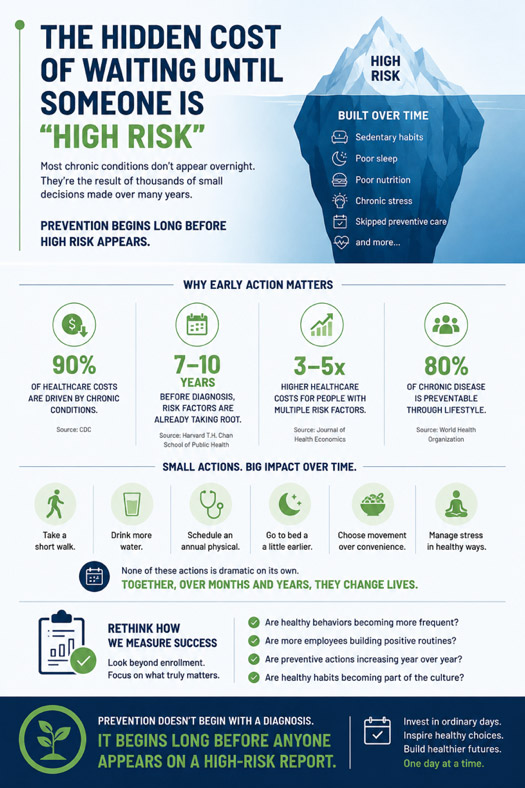
The most expensive healthcare claims rarely appear overnight. They're often the result of thousands of small decisions made over many years—taking the elevator instead of the stairs, skipping preventive screenings, getting too little sleep, spending long hours sitting, eating under stress, or simply never developing healthy routines in the first place.
These aren't dramatic events. They're ordinary days. And ordinary days eventually become extraordinary healthcare costs.
Most organizations devote significant resources to identifying employees who already need help. Far fewer invest the same energy into encouraging the everyday behaviors that keep people from becoming high-risk in the first place. That's a missed opportunity.
Healthy habits don't usually begin with major lifestyle overhauls. They begin with manageable actions repeated consistently:
- Taking a short walk.
- Drinking more water.
- Scheduling an annual physical.
- Going to bed a little earlier.
- Choosing movement over convenience.
None of these actions, by themselves, dramatically changes healthcare costs. Together, over months and years, they change lives.
This shift also requires rethinking how success is measured. Instead of asking only, "How many people participated in our wellness program?" organizations should also ask:
- Are healthy behaviors becoming more frequent?
- Are more employees building positive routines?
- Are preventive actions increasing year over year?
- Are healthy habits becoming part of the culture?
Prevention doesn't begin with a diagnosis. It begins long before anyone appears on a high-risk report.